
Fields in Benton County Property Tax Records
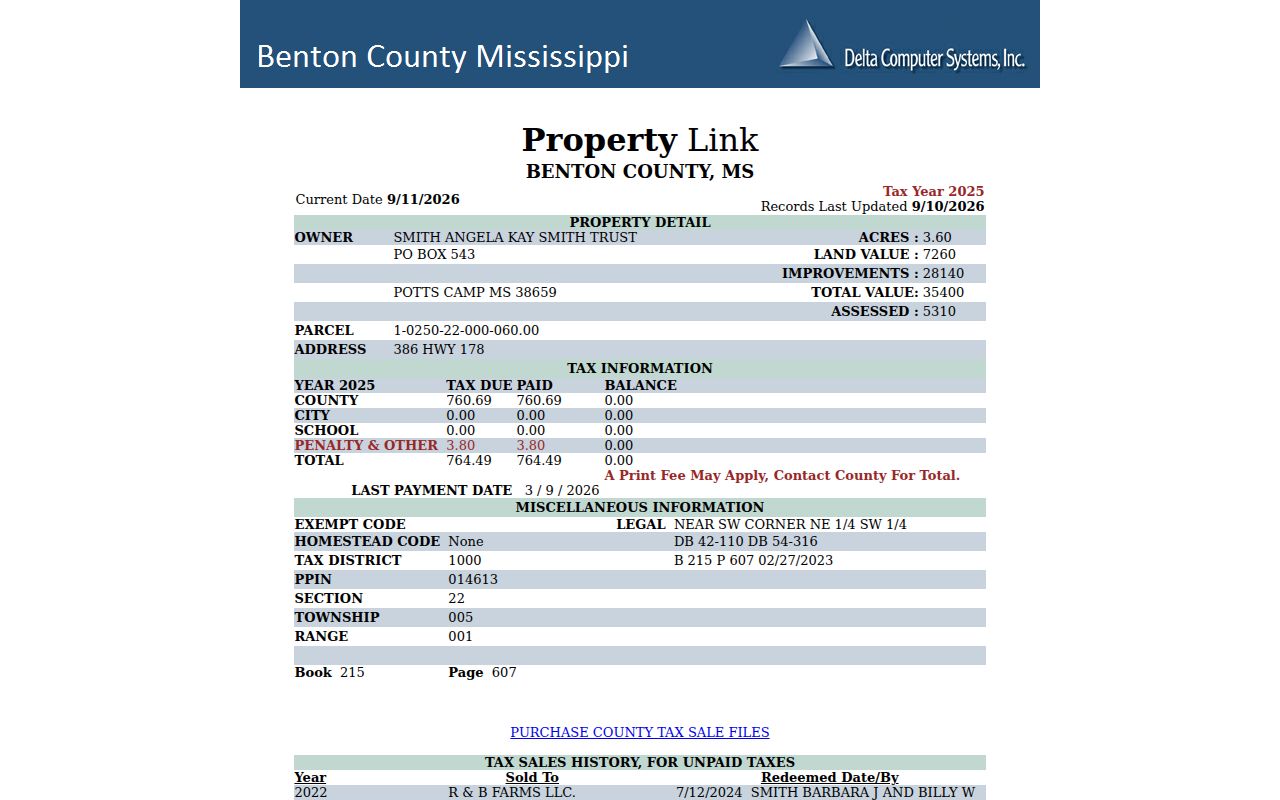
One tax card in Benton County does two jobs. Owner and mailing fields name the account, while situs and legal description fields pin down the land. Value lines support the appraisal; due, paid, balance, penalty, and sale-history lines describe what the collector has actually done. Keep the tax year attached to every figure.
| Record field | What it answers | Source |
|---|---|---|
| Land, improvements, total, assessed | How the taxable figure was built | Assessor detail |
| Exemption and homestead | Whether relief appears | Assessor roll |
| Due, paid, balance, penalty | Account status for the year | Collector record |
| Tax district | Which millage components apply | Tax card |
| Sale and redemption | Delinquency and later cure | Parcel detail |
A tax-sale purchaser does not automatically become the owner of record. A later redemption can undo the sale, so any title question needs the newest deed.
Search Benton County Tax Accounts by the Best Key
The Benton Property Link accepts several identifiers. Use the narrowest key that works. That discipline matters where a rural mailing city differs from the physical site, and comparing the PPIN and parcel description before opening a detail card prevents mismatches.
| Search key | Best use | Check |
|---|---|---|
| Name | Accounts tied to an owner | Initials and trusts |
| Number and street | Known situs address | Road abbreviations |
| Parcel | Tax and map bridge | Full identifier |
| Section, township, range | Rural tracts | Legal description |
| PPIN | Direct retrieval | Tax year |
Each result row reports owner, property number, address, parcel, tax year, and update date. Freshness is not title.
Read a Benton County Tax Bill in Four Passes
Check the parcel identifier before opening the matched card. This step keeps similar names and nearby road addresses from bleeding into one another.
- Confirm owner, situs, PPIN, parcel number, and legal description.
- Record tax year, land, improvement, total, and assessed values separately.
- Read due, paid, balance, penalty, and last-payment lines for that year.
- Review exemptions and every sale or redemption entry, then call if unclear.
- Assessed value
- The figure to which the tax process applies after classification.
- Millage
- A rate set by the relevant taxing authority.
- Homestead exemption
- Relief for a qualifying owner-occupied home.
- Tax lien
- A public claim tied to unpaid tax.
Benton County Values Begin with January 1
Benton County fixes January 1 as its appraisal date. Mississippi puts Class I owner-occupied residential property at 10 percent of true value, with most other real property in Class II at 15 percent. Check the classification first. A lower assessed number does not mean one home would sell for less than another.
Keep values separate. Assessed value serves taxation; it is neither a sale-price estimate nor an independent appraisal.
State guidance sets a four-year revaluation framework. Compare the same years and districts, because a new cycle or a class change can move the record. The public card separates four numbers. Land value, improvement value, total value, and assessed value each deserve a note, not just the final figure. Land and buildings can change on different facts. The assessment ratio then converts the relevant true value into the figure that millage multiplies.
One caveat applies to the linked appraisal detail. It may require an account or subscription, though the public tax card stays open to anyone. Use the public fields for a preliminary review. For a disputed characteristic, ask the assessor for the existing appraisal material rather than guessing from the card.
Homestead Filing in Benton County
The Mississippi homestead guidance gives a January 1 through April 1 application window and lists proof for an application. The local assessor handles filing. Ownership, occupancy, and required documents should be checked as of January 1.
- Identify the parcel and owner exactly.
- Bring the state-listed proof for the applicant and home.
- Ask whether a move or ownership change requires reapplication.
- Verify the code on the later property tax record.
Prior exemptions never carry forward; check the current card.
Benton County 2026 Millage Context
The Benton millage table splits each rate into county, municipal, school, and other parts. Read it with its effective year. Ashland, Hickory Flat, Snow Lake, and county-only parcels differ. Combinations vary by parcel, not by postal city.
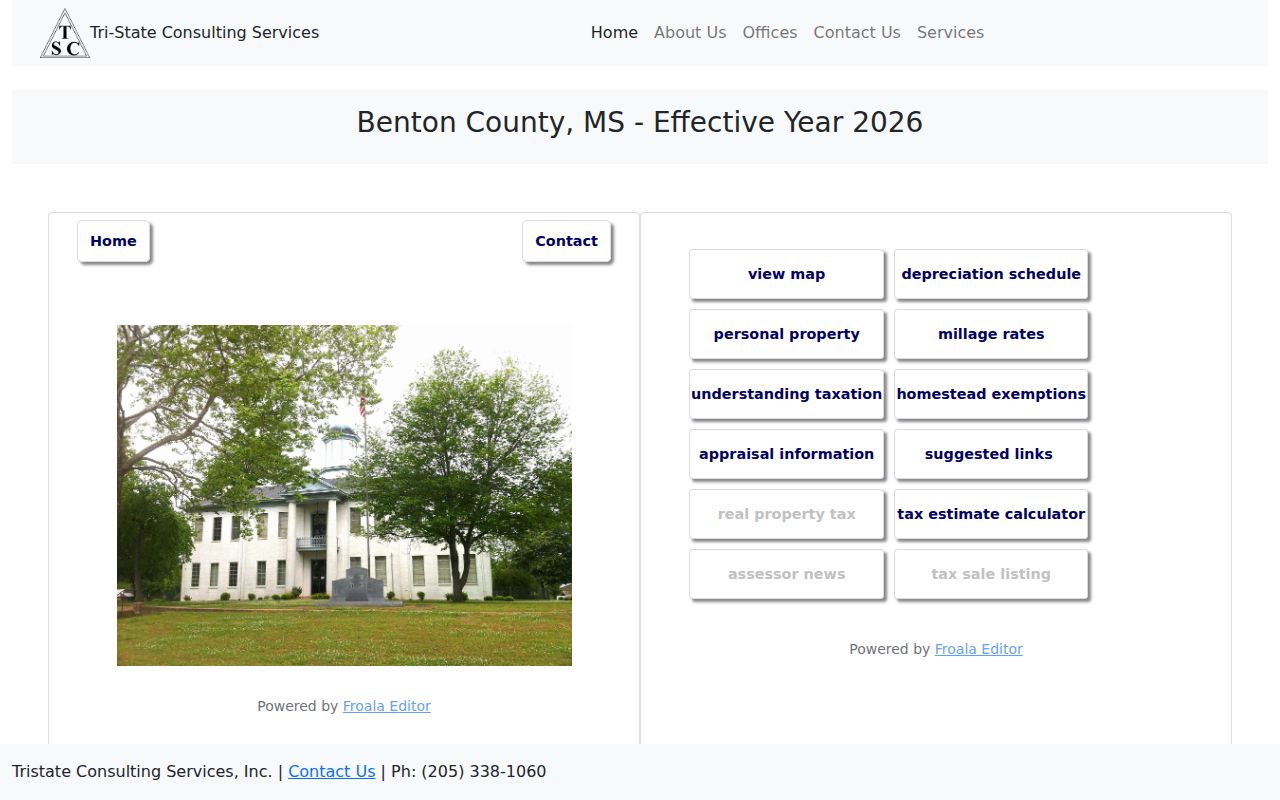
The Tri-State Benton landing page, marked Effective Year 2026, gathers the current assessment, map, homestead, millage, appraisal, and tax-sale routes in one place.
Paying Benton County Property Tax
Benton County property tax is due on February 1. The Tax Assessor/Collector takes payments online, in person, by phone, and by mail. Card payments draw a 2.35 percent fee. Confirm the parcel number and tax year before you pay. One name can return several accounts on the tax roll.
The office sits at 190 Ripley Avenue, Ashland, MS 38603, with mail sent to P.O. Box 337. Hours run Monday through Friday, 8:00 a.m. to 5:00 p.m. Assessment questions go to 662-224-6323; collection questions to 662-224-6315.
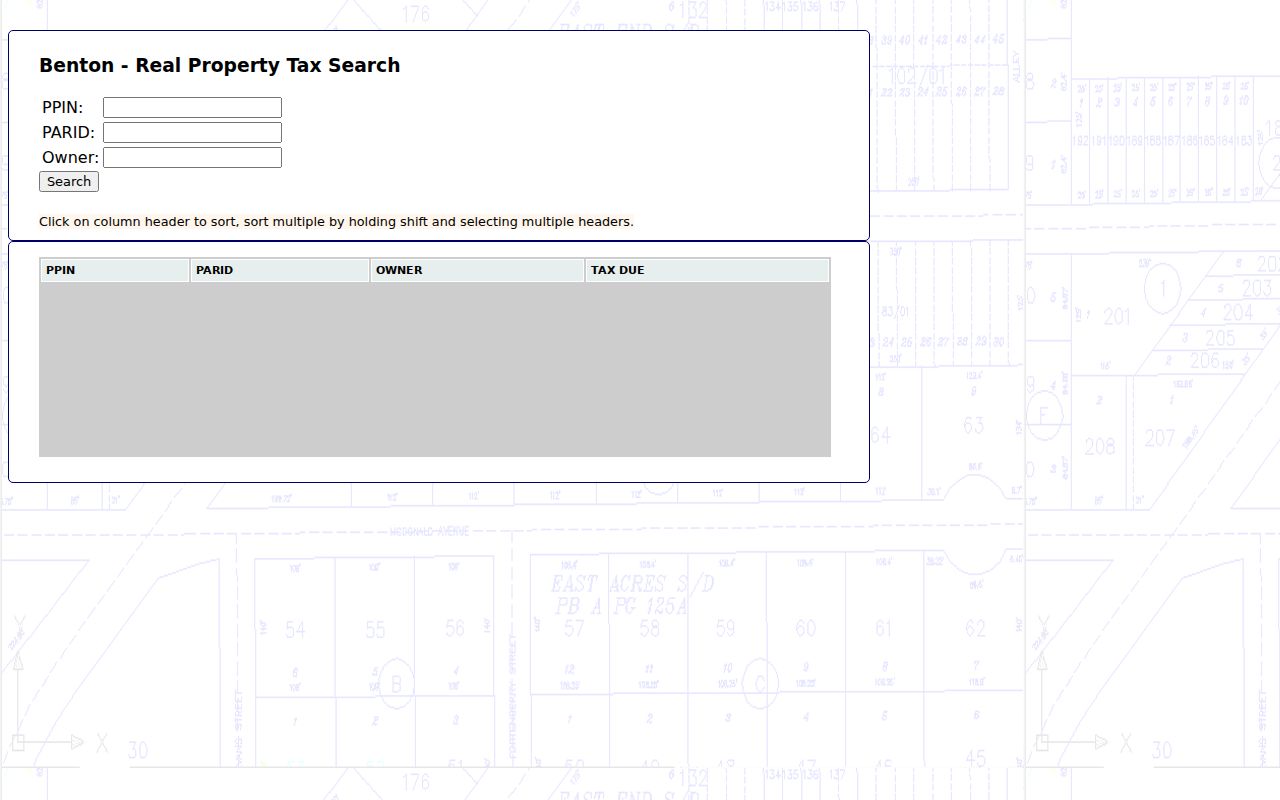
A separate Tri-State real-property tax search displays PPIN, PARID, owner, and TAX DUE. The results appear in a sortable table.
Tax Sales Can Hide a Benton County Redemption
One Benton County parcel tells a two-part story. Its parcel detail shows a 2022 sale followed by a 2024 redemption, plus an earlier sale that was also redeemed. Reporting only a purchaser would erase what happened next. Benton County property tax records show collections, not ownership.
For purchase or estate work, compare sale history with the owner field and the newest Chancery deed, which the deed records guide covers.
Appeal a Benton County Assessment on Time
Start with the assessor. Ask how classification, measurements, and value were derived. Bring the parcel card, photographs, consistent sales evidence, and proof of any factual error. The Mississippi DOR property-tax guidance says roll objections are due by the first Monday in August and sends owners to the Chancery Clerk for local procedure.

Appeal window. Confirm the calendar before the first Monday in August; missing the local deadline can delay review.
An appeal is about assessment. Pin the dispute to one field. Whether the argument concerns class, acreage, building characteristics, or an exemption code, naming that field beats a general objection, while payment questions go to the collector and deed meaning to the Chancery Clerk.
Offline Access to Benton County Tax Records
Free options work best first. The public card costs nothing. The appraisal-detail view may sit behind a login or subscription gate, though. A field may refuse to load at times. When that happens, take the request to the counter, the phone, or the mail instead. A written request under the Mississippi Public Records Act should name the PPIN. It should also give the tax year and the exact record you want. Expect possible charges for search, review, and copying. Written procedures set the response timeline for the public body handling it.
Route each question to the right office. The assessor answers classification, appraised and assessed figures, and exemptions. The collector handles amounts due, payments, balances, penalties, posting dates, and sale status. The Chancery Clerk covers the Board of Supervisors roll. That office also handles local appeal steps, land redemption, and deed consequences. This division keeps a tax-payment question out of the title-record queue.
Keep your own trail. Save the URL, the year, the update date, and the parcel key. A current portal can still miss courthouse activity. Confirm any disputed amount with the custodian before paying it. For mailed requests, include a return address and request an estimate before copies are made.